 Skip to content
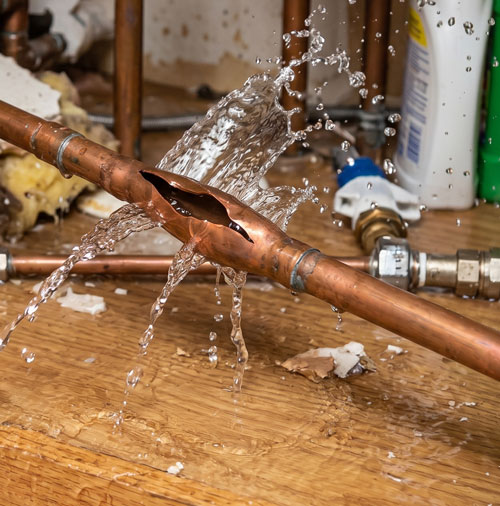
It is half past nine at night, something is wrong with the plumbing, and you are weighing an after-hours call against waiting until morning. That is a judgement about risk, and it is worth making deliberately rather than by instinct. This guide is a framework for deciding which problems genuinely will not keep.
The Question Behind the Question
People usually phrase it as whether the problem is serious. That is not quite the right test. Plenty of serious plumbing problems are perfectly safe to leave overnight, and a few minor-looking ones are not.
The useful question is narrower: is this getting worse while I wait, and by how much? A problem that is stable at midnight and stable at eight in the morning has cost you nothing but discomfort. A problem that compounds hourly has a running meter attached to it, and that meter is usually larger than any after-hours premium.
Three Tests That Settle Most Cases
Run the situation through these in order:
- Is water actively escaping, and can it be isolated? Escaping water that you have successfully shut off is no longer an emergency. Escaping water you cannot stop is, without exception.
- Is there a health or safety dimension? Sewage, gas, and water near electrical equipment change the calculation entirely, regardless of volume.
- Can the household function overnight? One unusable toilet in a two-bathroom home is an inconvenience. No usable toilet at all, or no water, is a different matter — particularly with young children, elderly residents, or anyone unwell.
Most situations resolve clearly against those three. The genuinely ambiguous cases are fewer than people expect.
Call Now: The Non-Negotiables
Water you cannot stop. If the main is closed and water still flows, or a valve has failed, that is immediate regardless of the hour.
Sewage entering the house. A health hazard that spreads and contaminates materials progressively. Waiting increases both the cleanup and what has to be discarded.
Any suspicion of gas. Leave the building and call the utility or emergency services from outside. This is not a call to a plumber first.
Water reaching electrical equipment. Water near panels, outlets, or the air handler is a safety issue, not merely a plumbing one.
No water at all to an occupied home. Basic sanitation depends on it.
A water heater discharging steam or extremely hot water, or a relief valve venting repeatedly. Treat as urgent and keep people away from it.
Usually Safe Until Morning
Equally worth stating plainly, because unnecessary after-hours calls are a real cost:
- A dripping tap, however irritating the sound.
- One slow drain, with other fixtures draining normally.
- A running toilet, once you have closed its stop valve.
- No hot water, where the tank is not leaking and there is no gas smell.
- Low pressure at a single fixture.
- A small leak you have contained in a bucket and can monitor.
The common thread is that each is stable. Nothing is deteriorating meaningfully between now and morning, so paying a premium buys convenience rather than protection.
One Fixture or All of Them?
This is the single most useful thing you can establish before phoning, and it costs nothing. Check whether the problem is confined to one fixture or affects several.
One slow or blocked fixture while everything else behaves normally is a local blockage. Several fixtures affected at once — particularly the lowest ones in the house, or a toilet bubbling when the washing machine drains — points to the main line rather than any individual fixture.
That distinction matters for urgency. A main line problem tends to escalate, because everything the household drains has nowhere to go and will find the lowest opening available. A single blocked basin will not do that.
The Arithmetic of Waiting
After-hours work costs more, and that is not unreasonable — it reflects staffing outside normal hours. The question is what you are buying.
Where a problem is stable, you are buying convenience, and waiting is the rational choice. Where water is running or contamination is spreading, the premium is small against what accrues overnight. Water damage does not scale linearly with time — a few hours of unchecked water can move a job from drying a floor to replacing flooring, subfloor, and lower wall sections, and materials saturated long enough often cannot be salvaged at all.
So the honest framing is not cheaper versus more expensive. It is a known modest cost now against an uncertain and potentially much larger one later.
While You Are Waiting
Whichever way you decide, reduce the load on the system. Stop using water in the affected part of the house — every litre that goes down a drain connected to a struggling line makes things worse. Hold off on dishwasher and washing machine cycles entirely, since those discharge a large volume at once.
Resist chemical drain openers, especially before a technician attends. They often fail on a substantial blockage, and they leave caustic liquid standing in the line for whoever opens it. Fixture and material standards are maintained by bodies such as the IAPMO plumbing standards organisation, and broader water-use guidance is published through the EPA WaterSense program.
Making the Call Efficient
A few details, offered up front, materially shorten the visit and sometimes change what gets dispatched:
- Which fixtures are affected, and which are fine.
- Whether you have shut water off, and at which valve.
- When it started and whether anything preceded it.
- Whether it is clean water or sewage.
- Anything you have already tried.
- Where your cleanout is, if you know.
Questions From Las Vegas Homeowners
I stopped the leak myself. Do I still need someone out?
Not urgently — you have converted an emergency into an appointment, which is the right outcome. But do book it. A line that failed once at that point has usually told you something about its condition, and a fixture left isolated is a fixture out of service.
No hot water overnight — emergency or not?
Generally not, provided the tank is not leaking and there is no gas smell. It is genuinely unpleasant rather than damaging. The exceptions are the safety ones: a leaking tank, a relief valve discharging, or any gas odour.
Water is coming up in the shower when the toilet flushes. How urgent?
More urgent than it looks. Waste appearing at a different fixture means the main line is not carrying flow and is backing up to the lowest opening. That escalates with continued use, so stop using water and treat it as same-day at minimum.
Deciding Well
Emergency plumbing is worth paying for when the situation is deteriorating and worth deferring when it is not. Applied honestly, that line is clearer than it feels at ten at night — and when in doubt, describing the situation on the phone usually resolves it in a couple of minutes.
Hire The Hippo Ideal Services provides emergency plumbing services across Las Vegas. For property access problems outside our trade, lock and garage entry services and residential locksmith services handle that side. If your situation meets any of the call-now criteria above, contact our team rather than waiting it out.
