 Skip to content
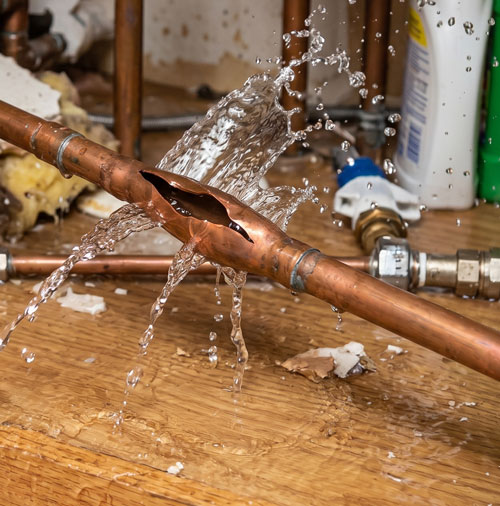
Almost every plumbing emergency is made worse by the same thing: the first ten minutes spent looking for a valve nobody could find. This is a preparation guide. It covers where your shutoffs are, how to stop water fast, and exactly what to do in the opening minutes of the failures that actually happen in Enterprise homes.
Find Your Shutoffs This Week, Not During a Flood
If you take one thing from this article, take this. The difference between a damaged cabinet and a damaged floor, ceiling, and set of walls is usually how many minutes water ran before someone closed a valve.
Locating your shutoffs takes about fifteen minutes on a calm afternoon. Doing it while water is spreading across a floor, in the dark, with a torch you cannot find, takes considerably longer and goes considerably worse. Walk the house now and find every one of them.
The Main Shutoff: Locate It and Test It
Your main valve stops all water entering the house. On slab-built homes here it is commonly near the front of the property, in a box at the property line, or on an exterior wall near where the service enters. Check the garage wall and any utility closet as well.
Finding it is necessary but not sufficient — you also need to know it turns. Valves that have not moved in fifteen years seize, and discovering that during an emergency is the worst possible timing. Operate it fully closed and fully open once, gently. If it will not move, or if it weeps afterwards, have it dealt with as routine work rather than as a crisis.
Two practical notes: a meter-box valve may need a meter key rather than a hand, so buy one and keep it where you will find it. And make sure at least one other adult in the household knows all of this. Emergencies do not schedule themselves for when you are home.
Fixture Stops: The Small Valves That Save Rooms
Most fixtures have their own local shutoff, and using one lets you isolate the problem without cutting water to the whole house.
- Toilets — a valve on the wall or floor behind the bowl, usually on the left.
- Sinks — two stops under the basin, hot and cold.
- Water heater — a valve on the cold inlet at the top of the tank.
- Washing machine — two valves behind the machine, a very common source of failures.
- Refrigerator ice maker — a small line that is easy to forget until it fails.
Older stops seize just as main valves do, and forcing a corroded one can snap it and turn a small problem into a large one. If a stop will not turn, go to the main instead and deal with the stop afterwards.
First Response: A Burst or Spraying Supply Line
This is the one where minutes translate directly into money. Close the nearest fixture stop if there is one and it turns easily; otherwise go straight to the main. Do not spend time investigating the cause first.
Once water is stopped, open a low tap — an outside hose bib or a ground-floor sink — to drain pressure and the water still standing in the pipes. If water reached anywhere near outlets, panels, or fixtures, treat electrical safety as the priority and cut power to the affected area from the breaker rather than wading in.
Then start removing water. Airflow and dehumidification in the first hours meaningfully reduce what has to be repaired later.
First Response: An Overflowing Toilet
Do not flush again to see what happens — that is the instinct and it is the wrong one. Close the stop valve behind the toilet. If it will not turn, lift the tank lid and push the flapper down by hand to seal the outlet, which stops water entering the bowl immediately.
With the water stopped, the question becomes whether this is a blocked toilet or a blocked line. A single fixture misbehaving while everything else drains normally is a local problem. Several fixtures affected at once is not, and that changes what needs to happen next.
First Response: Sewage Backing Up
Treat this differently from clean water, because it is a health matter rather than only a damage one. Stop using water anywhere in the house — every sink, shower, and appliance adds to what is coming back up. Keep people and pets away from the affected area.
Backup appearing at the lowest fixtures, or at more than one fixture simultaneously, indicates a main line problem rather than a fixture blockage. Wear gloves and eye protection for any contact, and do not run the washing machine or dishwasher while investigating.
First Response: Water Heater Failure
A tank leaking from the bottom is failing and will not recover. Close the cold inlet valve at the top of the tank. Then cut its energy source: the breaker for an electric unit, or the gas control valve for a gas one.
If water is discharging from the temperature and pressure relief valve, that valve is doing its job — it is a safety device relieving excessive pressure or temperature. Never cap it, plug it, or block it. That is a genuinely dangerous thing to do, and the correct response is to shut the heater down and have the cause found.
The One Smell You Never Investigate Yourself
If you smell gas near a water heater or anywhere else, this stops being a plumbing article. Do not operate light switches, do not use a phone indoors, and do not look for the source. Leave the building, then call the gas utility or emergency services from outside.
This is the one situation where the correct action is to leave and let someone equipped for it handle the problem. No exceptions worth making.
What to Keep Where You Can Find It
- A meter key if your main valve needs one.
- An adjustable wrench and a pair of pliers.
- A working torch with charged batteries, kept somewhere fixed.
- A flange plunger for toilets — the type with the extended lip, not a flat cup.
- Old towels and a wet-dry vacuum if you have one.
- Gloves and eye protection.
One item deliberately absent: chemical drain openers. They frequently fail to clear the blockage, and they leave a caustic liquid standing in the line for whoever opens it next. They can also damage older pipe. Fixture and material standards are maintained by bodies such as the IAPMO plumbing standards organisation.
Document It While It Is Happening
Once water is stopped and people are safe, take photographs before you start clearing up. Wide shots showing the extent, close shots showing the source, and anything damaged. It takes two minutes.
Note the time you discovered it and what you did. Keep invoices. Claims are considerably easier to support with a contemporaneous record than with a reconstruction weeks later, and mitigating damage promptly is generally expected of you in any case.
Preventing the Predictable Ones
Washing machine supply hoses are a leading cause of significant household water damage and they are inexpensive to replace. Rubber hoses degrade; braided stainless is a modest upgrade. If yours are original to a machine bought years ago, change them.
Beyond that: know your water heater age, look under sinks occasionally for the early stain that precedes a real leak, and pay attention to a water bill that rises without explanation. Broader water-use guidance is available through the EPA WaterSense program.
Questions From Enterprise Homeowners
I closed the main but water is still coming out. Why?
Usually it is the water already in the pipes draining out, which is normal and stops shortly. If it continues steadily, either the valve is not fully closing or you have closed something other than the main.
Should I turn the water off when travelling?
For longer absences it is sensible, since an unnoticed failure can run for days. Consider what else depends on the supply — irrigation and any equipment needing water — and remember that a valve unused for years may not cooperate, which is another argument for testing it while nothing is wrong.
Can I use a plunger on a toilet that is already full?
Yes, though bail some water out first so it does not overflow as you work. Use a flange plunger, seat it properly, and use steady pressure rather than violent thrusts. If it does not clear after a reasonable attempt, stop — repeated force can unseat the toilet.
Preparation Is Most of the Outcome
The households that come through a burst line with a small repair bill are rarely luckier than the ones that do not. They simply knew where the valve was and reached it quickly.
Hire The Hippo Ideal Services provides emergency plumbing services across Enterprise and the Las Vegas Valley. Once the water is off and everyone is safe, contact our team — and if a shutoff valve on your property will not turn, treat that as the job to book before anything goes wrong.
