 Skip to content

Moving to the Las Vegas Valley, NV: A Home Systems Checklist
People move to this valley from places where water is soft, winters are wet and air conditioning is a summer convenience rather than the thing the whole house is built around. The houses here work differently, and the first year is when new owners find that out — usually through a bill or a failure rather than through anybody telling them.
This is the list we would give a friend who has just closed on a house here. None of it is urgent on day one. All of it is cheaper to know now than to discover later.
First: Find Your Shutoffs
Before anything else, find the main water shutoff and know how to operate it. In this valley it is typically at the front of the property, and on many homes there is also a shutoff at the house. Find both, turn them far enough to be sure they move, and show everybody in the household where they are.
Do the same for the gas shutoff and for the main electrical panel. A leak at two in the morning is not the moment to learn the geography of your own house.
The Water Here Is Hard, and It Is Working on Your Plumbing
This is the single biggest difference newcomers notice. Hard water leaves mineral scale, and scale is what shortens the life of a water heater, blocks aerators and shower heads, spots glassware and makes soap behave differently from how you are used to.
It is worth deciding early whether you want to treat it. A water softener addresses the hardness itself; filtration addresses taste and other water quality questions. They are different devices solving different problems, and plenty of homes here end up with both. If the house already has a softener, find out whether it is actually working before you assume it is.
What the Water Here Does to a House
Hardness is not a health problem, it is a maintenance problem, and it turns up in the same places in nearly every house in the valley. Knowing where to look is most of the work.
- Fixtures and glass:scale on faucets, shower glass and tile is the visible part, and the part that comes back however often you clean it.
- Water heaters:mineral settles in the bottom of the tank, which is why flushing matters more here than it did wherever you moved from.
- Dishwashers and washing machines:appliances that heat water carry the same deposit internally, where nobody sees it until performance drops off.
- Ice makers and filtered taps:small-bore lines and their valves are the first things to block, and the first things people notice.
- Soap and detergent:needing more product for the same result, in the shower and in the laundry, is a hardness symptom rather than a product problem.
- Irrigation emitters:drip heads and spray nozzles crust over outside for exactly the same reason they do inside.
- Treatment options:a softener changes how the water behaves; a filter changes what is in it. Those are different jobs, and a house may want one, both or neither.
- Where to start:live with the water for a season before buying equipment, and note which of the above actually bothers you. That is a better brief than a sales pitch.
None of this is urgent in your first week. It is the kind of thing that is far cheaper to plan for than to react to, which is why it belongs on a checklist rather than on a repair ticket.
Check the Water Heater Before It Checks You
Ask three questions about the water heater you inherited: how old is it, has it ever been flushed, and is it in a place where a failure would be expensive. Scale accumulates in the bottom of a tank and it shortens the tank’s life, so a heater that has never been maintained in hard water is on a shorter clock than the same heater elsewhere.
Water heaters in a garage are an inconvenience when they fail. Water heaters in an interior closet or upstairs are a different kind of problem. Knowing which you have tells you how much warning you can afford to ignore. See water heaters and tankless water heaters.
Understand the Air Conditioning Before June
Cooling is not a comfort system here, it is the system the house depends on, and the worst time to find out about yours is the first genuinely hot week. Have it looked at in spring rather than in summer: check the filter and how often it needs changing, find out when the system was last serviced, and get an honest read on its condition while there is still time to plan. The air conditioning page covers what that involves.
And yes, the heating matters too. Desert nights get cold, and the furnace in a house that has coasted for a few winters is worth checking before you need it.
New to the Valley and Not Sure Where to Start?
Older Homes and Their Pipes
Valley housing stock spans decades, and the pipe material in your walls depends on when your house was built. If you are seeing discolored water, pinhole leaks, or pressure that has quietly dropped, those are the symptoms that lead to a conversation about repiping. If you are not seeing them, this is a thing to be aware of rather than a thing to act on.
The same applies below ground. A sewer line that is old, has roots in it, or has shifted will tell you about itself through slow drains in more than one fixture at once — which is different from a single blocked drain.
Irrigation and the Landscape
Desert landscaping runs on drip irrigation, and drip systems fail quietly: an emitter clogs, a line splits under the gravel, and the plant dies weeks later while the water carries on running. Walk the system with the controller on, zone by zone, in your first month. You will find something, and it will be cheaper than the plant.
Drains, Sewers and What Runs Below the Slab
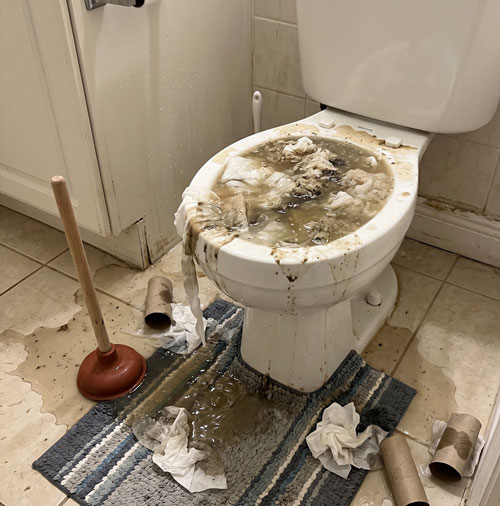
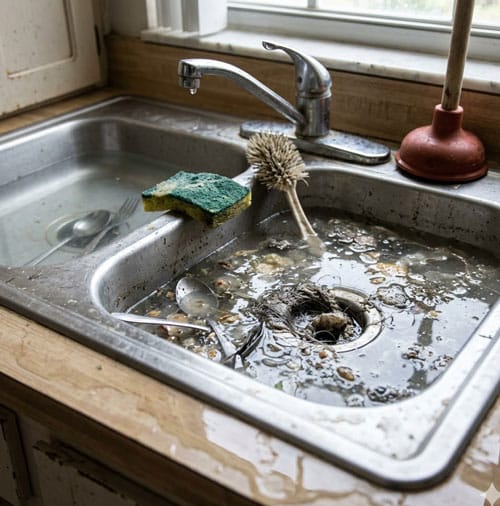
Drainage problems here are rarely dramatic at first. They announce themselves slowly, and the early signs are easy to live with until they are not.
- A single slow fixture:usually local to that fixture, and usually the easiest thing on this list to deal with.
- More than one fixture slow:that points further down the line rather than at the fixture, and it is worth looking at properly.
- Gurgling when something else drains:air moving where it should not be, which is a venting or a partial-blockage question.
- The same blockage coming back:a pattern, not bad luck. Something about that section of line is holding material.
- Older properties:the material and the route of an older sewer line both matter, and a camera inspection answers that directly instead of by guesswork.
Winter, Briefly
It does freeze here, just not for long. Exposed hose bibs, irrigation backflow assemblies and pipes in unconditioned spaces are what get caught out, and a single cold night is enough. It is a short list and a cheap one to deal with.
Know Who to Call Before You Need To
The last item is the least glamorous: decide now who you would call. Finding a plumber during an emergency is the most expensive way to choose one. Our emergency plumbing page explains how that works, and you can reach us on (702) 396-5225 or through the contact page.
| What newcomers notice | What is worth doing about it in the first year | |
|---|---|---|
 Hard water | Scale on shower glass and fixtures, and more soap for the same result. | Live with it a season, then decide between a softener, a filter or neither. |
 Drains and sewer | Slow drains, gurgling, and the same blockage coming back to the same place. | Find out what the line is made of and where it runs before you need to know. |
 Cooling and heating | The cooling system is the one the whole house leans on out here. | Have it looked at in spring, not in the first week of real heat. |
 Who you call | The worst time to choose a contractor is in the middle of a failure. | Choose one now, while nothing is wrong and you can compare properly. |
Frequently Asked Questions
Do I need a water softener in the Las Vegas Valley?
It is not compulsory, and plenty of homes manage without one. What a softener changes is the rate at which scale builds in your water heater, fixtures and appliances. Decide it deliberately rather than by default.
How do I know how old my water heater is?
The data plate on the unit carries a serial number that encodes the manufacture date, and we can read it for you during a visit. Age plus whether it has ever been flushed tells you most of what you need to know.
When should I have the air conditioning checked?
Spring, before the first hot week. A system checked in the cool months can be planned around; a system that fails in high summer cannot.
My water pressure seems low. Is that normal?
It may be the pressure regulator, scale in the fixtures, or something in the supply piping. It is worth diagnosing rather than living with, because some of the causes get worse.
What should I check first in a house I just bought?
The shutoffs. Water, gas and electrical. Everything else on this list can wait a week; that one cannot.
Plumbing, HVAC and Electrical Across the Las Vegas Valley, NV
Every service below has its own page with the detail that matters before the work is scheduled.
THE LAS VEGAS VALLEY, NV
