 Skip to content

Who Needs a Permit? Plumbing, HVAC and Electrical Across the Las Vegas Valley
Permits are the part of a home project people find out about last and worry about most. The confusion in this valley is structural rather than personal: a Las Vegas address, a Henderson address, a North Las Vegas address and an unincorporated Clark County address are four different jurisdictions, and which one you are in is decided by a boundary you cannot see from the street.
This page sets out the shape of the problem and how we handle it, so that a homeowner knows what to expect before work is scheduled. It deliberately does not publish fee schedules or code sections, because those change and because the only version that matters is the one your building department is running today.
Four Jurisdictions, One Valley
Homes in the Las Vegas Valley fall under the building department of the city they sit in, or under Clark County if the address is unincorporated. Las Vegas, North Las Vegas, Henderson and Boulder City each run their own department; unincorporated county addresses — which include a great many neighborhoods that people describe as “Las Vegas” — are handled by Clark County.
A postal address is not a reliable guide to which. Plenty of homes have a Las Vegas mailing address and sit in unincorporated Clark County. That is the single most common reason a permit question gets the wrong answer.
The Work That Usually Needs a Permit
Requirements vary by jurisdiction, so treat the following as the categories to ask about rather than as a ruling. In general, work that changes the system rather than repairing a component is the work that gets permitted.
- Water heater replacement:a like-for-like swap is still a change of appliance, and it is the job that catches homeowners out most often.
- Repipes and re-routes:new supply piping, or moving a line, rather than repairing the line that is there.
- Gas line work:new gas piping, extending a line or moving an appliance connection.
- Sewer and drain replacement:replacing a sewer line or a section of it, rather than clearing it.
- Panel and circuit work:a service panel change, a new circuit or a sub-panel.
- HVAC change-outs:replacing the equipment rather than servicing it, including the electrical and the gas connections that go with it.
- Backflow and water-treatment tie-ins:equipment plumbed into the supply, where the connection back into the house system is the part that gets looked at.
- Additions and remodels:anything that moves walls, adds fixtures or changes what a system has to carry, where several trades are permitted together.
Repairs are usually the other side of the line: swapping a faucet, clearing a drain, replacing a failed part in an existing system. “Usually” is doing real work in that sentence, which is why the check happens per address rather than per job type.
How the Permit Is Handled on a Las Vegas Valley Job
When we do the work, the permit for it is ours to pull, schedule and meet. That is the normal arrangement and it is the one to expect from any licensed contractor.

- Confirming the jurisdiction:the address is checked against the building department that actually covers it before anything is scheduled, because a postal address is not a reliable guide.
- Pulling the permit:the application goes in under our licence, for the work that is actually being done.
- Scheduling the inspection:the inspection is booked with the department that issued the permit, and the work is staged so the inspector sees it at the point they need to see it — before it is covered, not after.
- Meeting the inspector:somebody from our crew is there for the inspection, so questions get answered on the spot instead of turning into a second trip.
- Correcting anything flagged:if the inspector asks for a change, the change is made and the re-inspection is arranged. That is part of the job, not an extra.
- Closing the permit out:the permit is signed off and closed. An open permit on a property is the thing that surfaces later, at a sale or a refinance, and it is far easier to close now than to reopen then.
- Handing over the paperwork:you get the permit record for the work. Keep it with the house documents; it is the evidence that the work was done under permit and that it passed.
- What this means for you:the permit side of the job is administrative work you do not have to do. You are not filing the application, tracking the inspection window or chasing the sign-off.
If you are doing the work yourself, or hiring someone who is not pulling the permit, responsibility for all of the above sits with the property owner. That is worth knowing before the work starts rather than after.
Why a Water Heater Is the Common Surprise
Water heaters catch more homeowners out than anything else, because replacing one feels like buying an appliance rather than altering a building system. It is not: it involves gas or electrical connection, venting, seismic strapping, the temperature and pressure relief line and often a pan and drain. Jurisdictions across the valley treat it as permitted work for good reasons, and the inspection exists to catch the venting and relief details that are genuinely dangerous when they are wrong. Our water heater and tankless water heater pages cover the work itself.
Who Pulls the Permit
When we do the work, we handle the permit for it. That is the normal arrangement and it is the one you want, because the party who pulls the permit is the party the inspection is scheduled against. Where a homeowner pulls their own permit, responsibility for the inspection and for any correction sits with the homeowner.
It is worth asking any contractor this question directly before work starts. The answer tells you a lot.
What an Inspection Actually Looks At
An inspection is not a search for reasons to fail you. It checks the things that are hidden once the work is closed up: that connections are made correctly, that gas and electrical work is safe, that venting and drainage run the way they should, and that nothing has been buried that should have been visible. Work that is done properly passes; work that needs correcting gets corrected and re-inspected.
Not Sure Which Jurisdiction Your Address Falls Under?
Unpermitted Work You Inherited
Buying a home in this valley frequently means inheriting somebody else’s weekend project. Unpermitted work is not automatically a crisis, but it becomes one at two moments: when you sell, and when something fails and an insurer asks how it was installed.
If you have found work you suspect was never permitted — a water heater in an odd place, a sub-panel nobody can explain, a bathroom that was clearly added — the useful first step is to have it looked at so you know what you actually have. What happens next depends on the jurisdiction and on what is found.

What the Inspection Looks At
An inspection is not a search for reasons to fail the job. It checks that the work in front of the inspector matches the permit and meets code.
- The connections:how the new work ties into what is already there, and whether it is accessible.
- The clearances and the venting:the things that are hard to see once the wall or the cabinet is closed up.
- The materials:whether what was installed is approved for that use, and whether it is installed the way the manufacturer and the code call for.
- The supports and the fastenings:whether pipe, duct and conduit are held the way they should be, so nothing sags, rubs or pulls loose later.
- The safety items:shutoffs, bonding, combustion air, and the things that only matter on the day something goes wrong.
How We Handle It
Before work is scheduled we confirm which jurisdiction your address falls under and what that department requires for the specific job. You are told what is being permitted, who is pulling it and what inspection follows. If a job turns out not to need one, you are told that too — the aim is that nobody is surprised in either direction. Reach us through the contact page or on (702) 396-5225.
| The work | What it involves | Where the permit line usually falls |
|---|---|---|
 Gas line work | New gas piping, an extension or moving an appliance connection | Normally permitted and inspected |
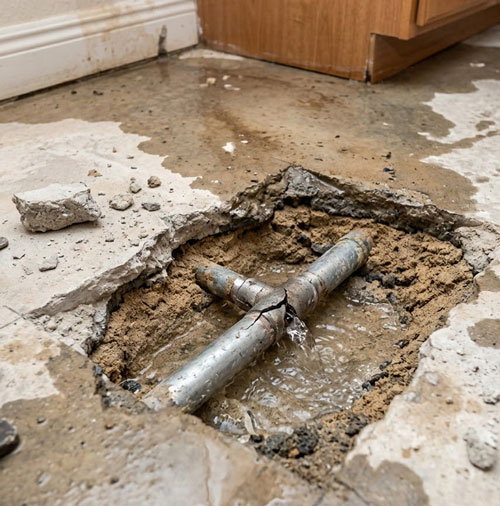 Slab and supply leaks | A repair to the line that is there, or a re-route of it | A repair usually is not permitted; a re-route usually is |
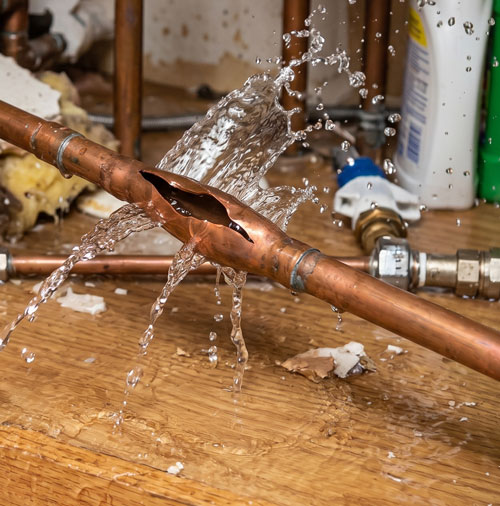 Burst or failing pipe | Emergency repair first, then the question of what is replaced | The repair gets you water back; the replacement is the permitted part |
 Sewer line replacement | Replacing the line or a section rather than clearing it | Permitted, and inspected before it is covered |
Frequently Asked Questions
How do I know which jurisdiction my home is in?
Not from your mailing address. Many homes with a Las Vegas address sit in unincorporated Clark County. Give us the address and we confirm the jurisdiction before anything is scheduled.
Do I need a permit to replace a water heater?
In this valley, replacing a water heater is normally permitted work, because it involves gas or electrical connection, venting and a relief line. We confirm the requirement for your address and handle the permit when we do the work.
Does a repair need a permit?
Usually not. The line generally falls between repairing a component and altering or relocating the system, but the exact line is set by your jurisdiction, so it is checked rather than assumed.
Who pulls the permit, me or the contractor?
When we do the work, we do. Ask any contractor this directly before work starts, because the party who pulls the permit is the party the inspection is scheduled against.
What if I find unpermitted work in a home I bought?
Have it inspected so you know what is actually there. It matters most when you sell and if you ever make a claim, and the right course depends on the jurisdiction and on what the work turns out to be.
Plumbing, HVAC and Electrical Across the Las Vegas Valley, NV
Every service below has its own page with the detail that matters before the work is scheduled.
THE LAS VEGAS VALLEY, NV
